Tuck Crunch
A beginner isolation strength exercise that works the abs, needing no equipment.
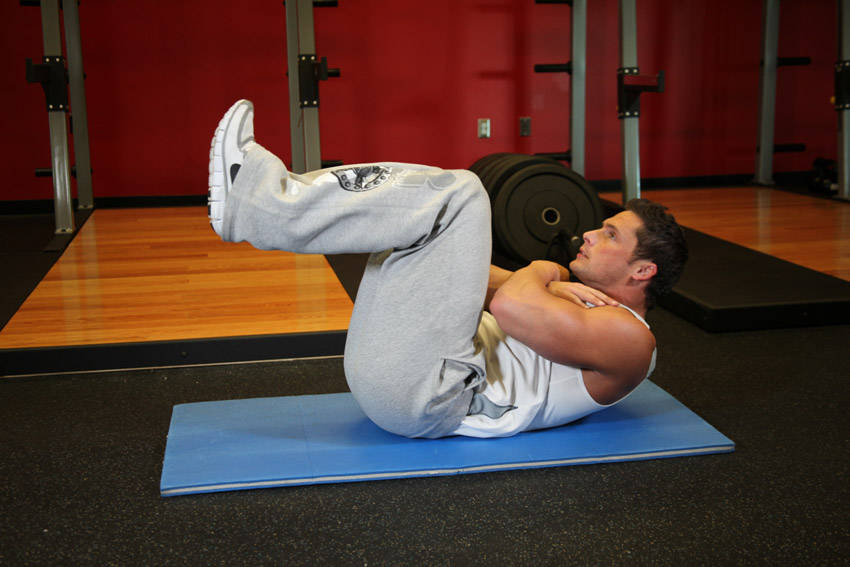 Starting position
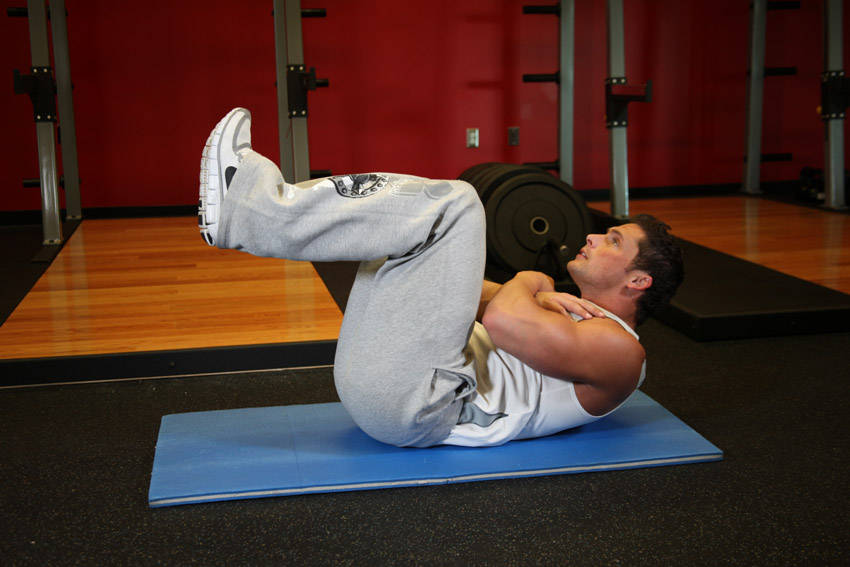 End position
How to Do Tuck Crunch
- To begin, lie down on the floor or an exercise mat with your back pressed against the floor. Your arms should be lying across your sides with the palms facing down.
- Your legs should be crossed by wrapping one ankle around the other. Slowly elevate your legs up in the air until your thighs are perpendicular to the floor with a slight bend at the knees. Note: Your knees and toes should be parallel to the floor as opposed to the thighs.
- Move your arms from the floor and cross them so they are resting on your chest. This is the starting position.
- While keeping your lower back pressed against the floor, slowly lift your torso. Remember to exhale while perform this part of the exercise.
- Slowly begin to lower your torso back down to the starting position while inhaling.
- Repeat for the recommended amount of repetitions.
Muscles Worked
Alternatives to Tuck Crunch
10 movements that train the same primary muscle, closest substitutes first — same kind of training, then variations of the movement itself, then a similar difficulty.
-
1
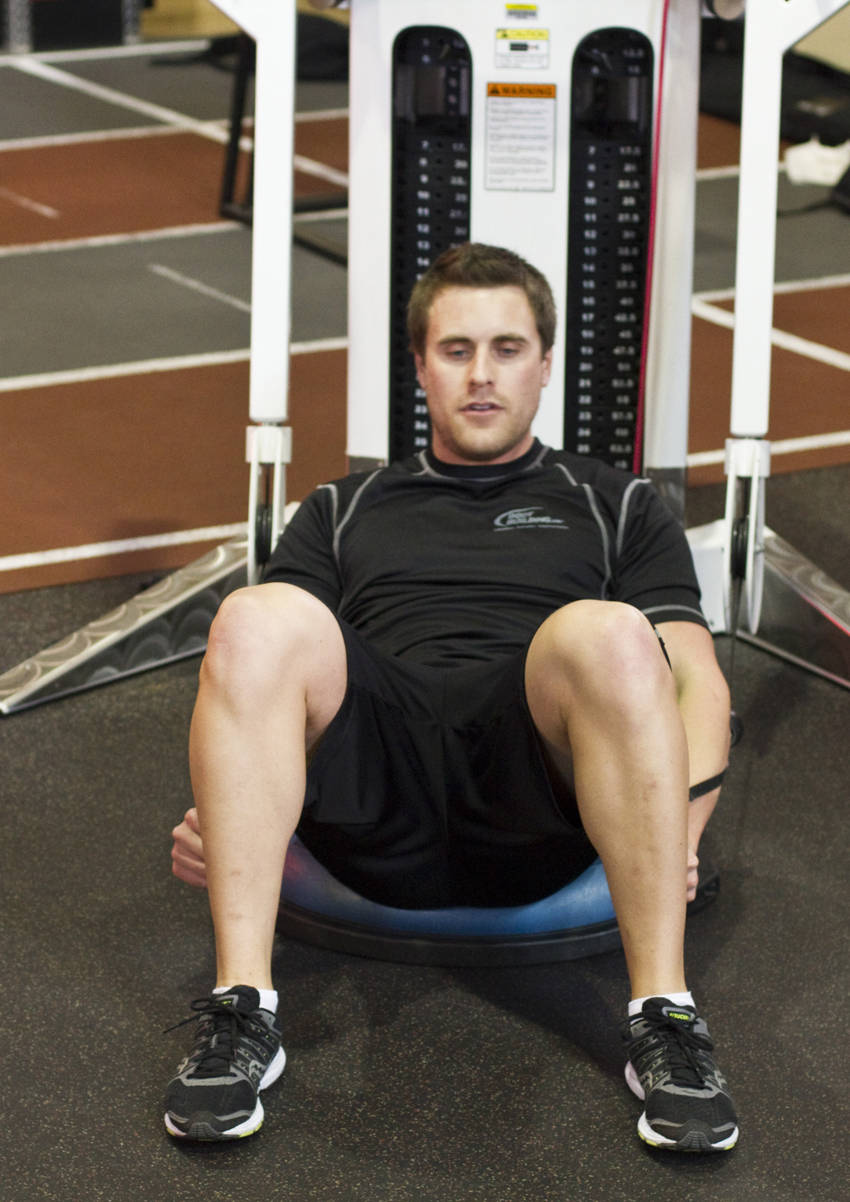
Bosu Ball Cable Crunch With Side Bends
A beginner isolation strength exercise that works the abs, using a cable machine.
-
2
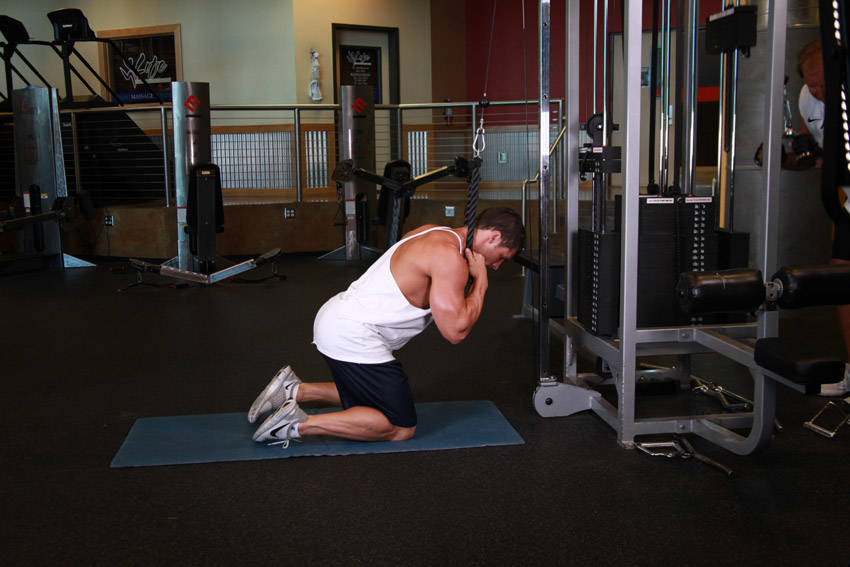
Cable Crunch
A beginner isolation strength exercise that works the abs, using a cable machine.
-
3
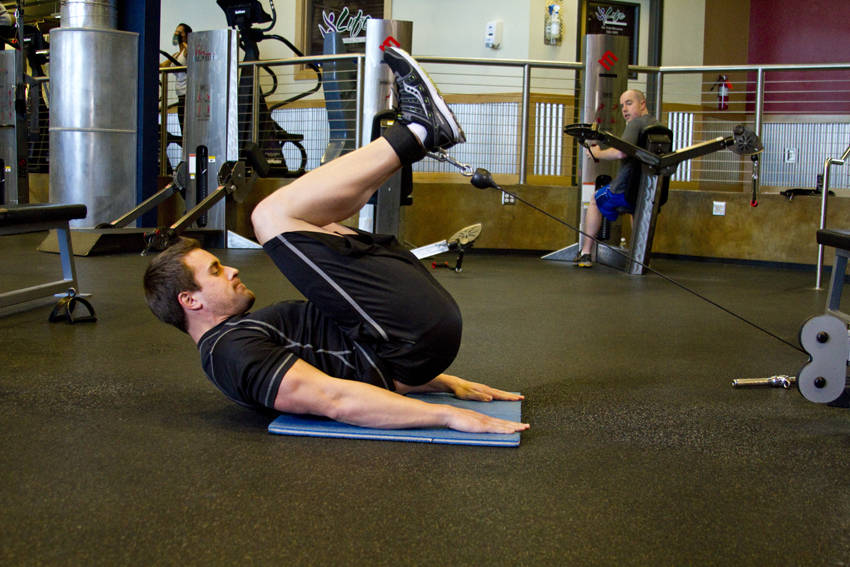
Cable Reverse Crunch
A beginner isolation strength exercise that works the abs, using a cable machine.
-
4
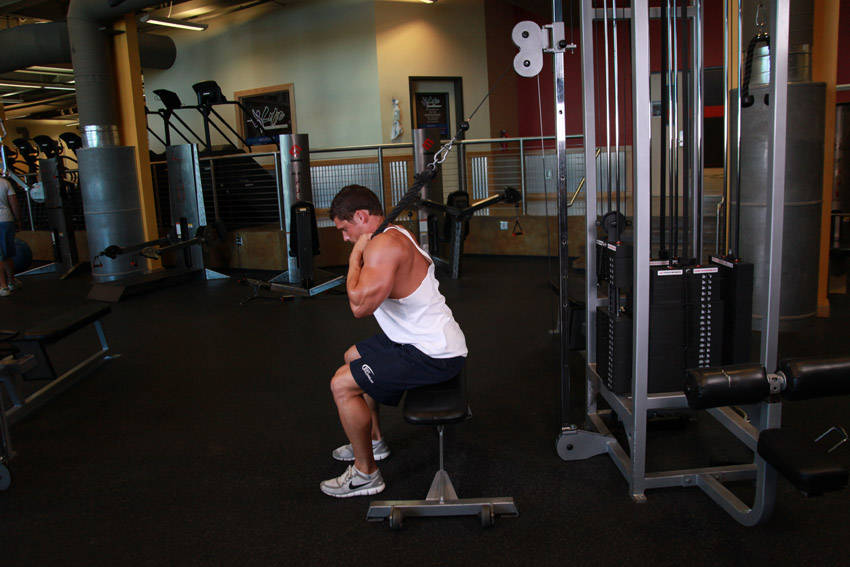
Cable Seated Crunch
A beginner isolation strength exercise that works the abs, using a cable machine.
-
5
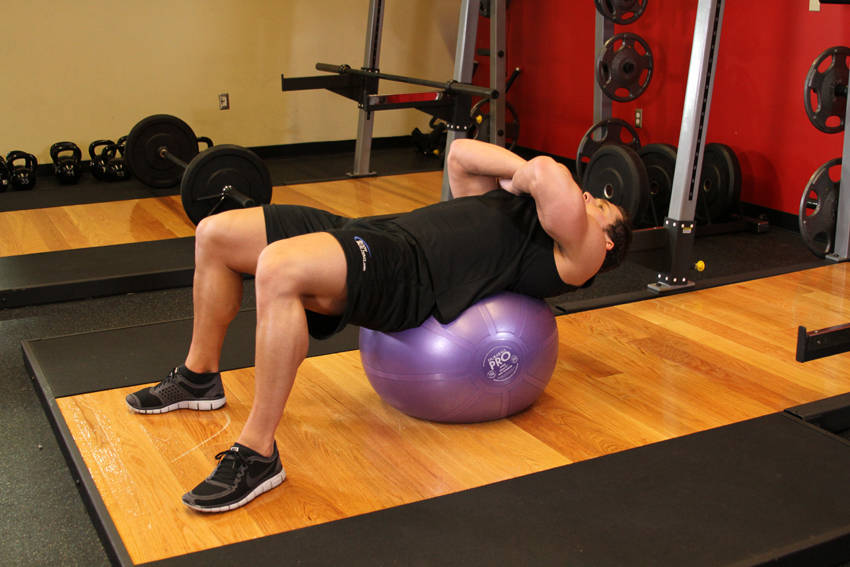
Exercise Ball Crunch
A beginner isolation strength exercise that works the abs, using an exercise ball.
-
6
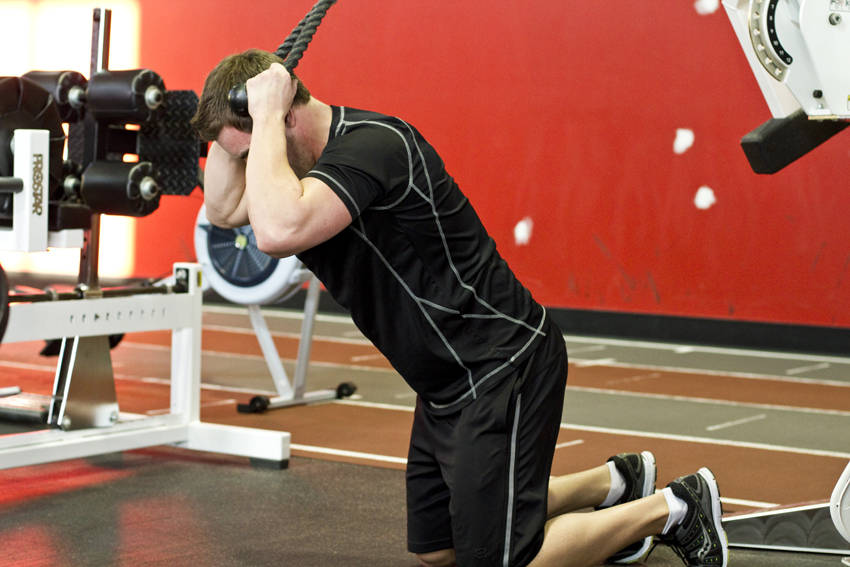
Kneeling Cable Crunch With Alternating Oblique Twists
A beginner isolation strength exercise that works the abs, using a cable machine.
-
7
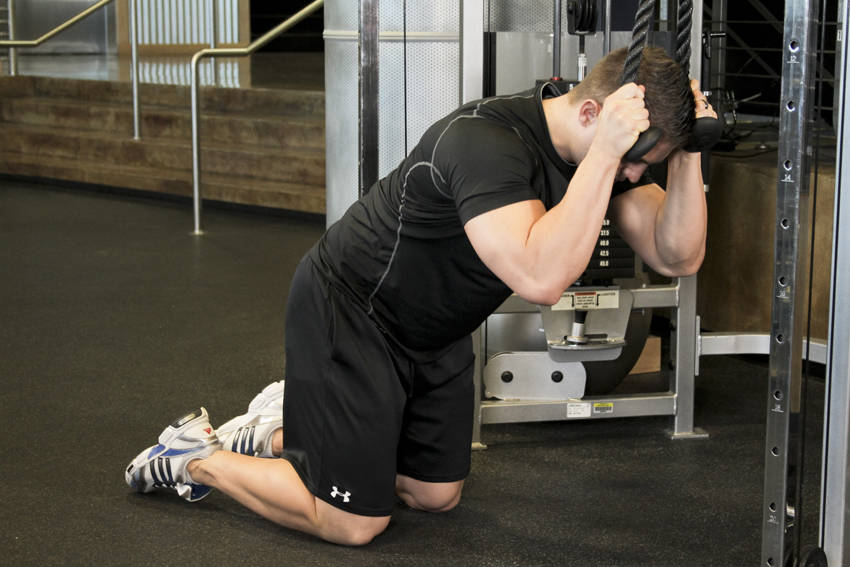
Rope Crunch
A beginner isolation strength exercise that works the abs, using a cable machine.
-
8
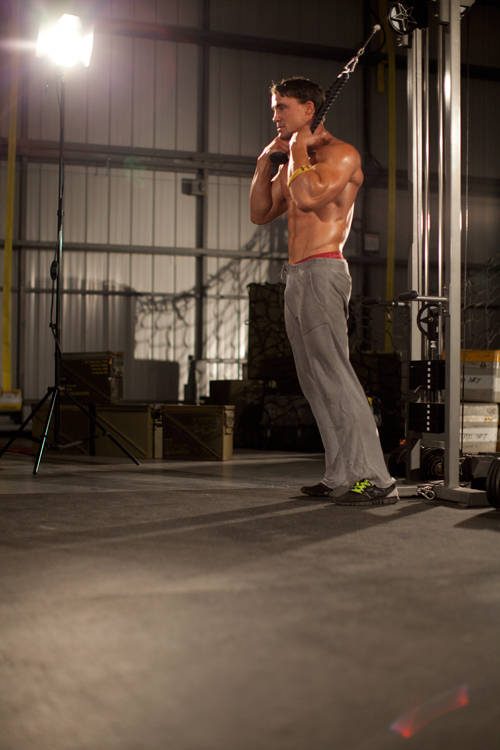
Standing Rope Crunch
A beginner isolation strength exercise that works the abs, using a cable machine.
-
9
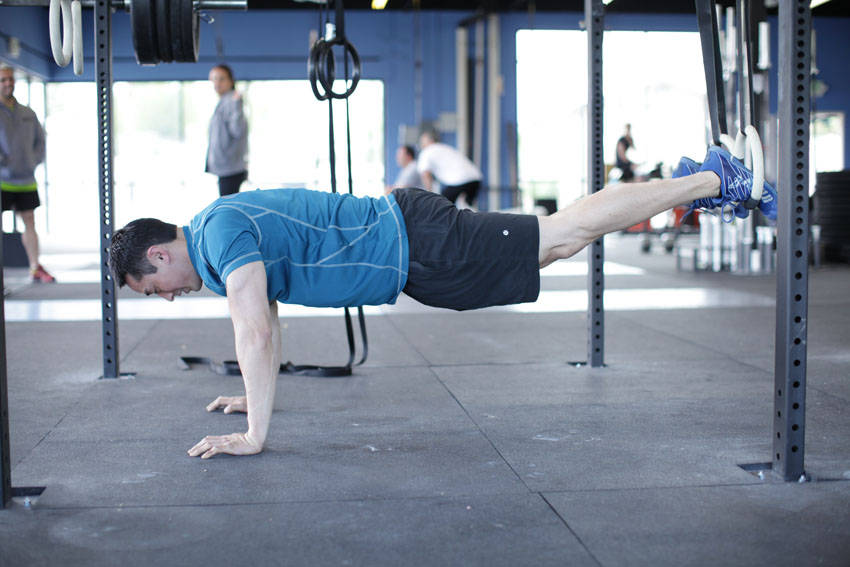
Suspended Reverse Crunch
A beginner isolation strength exercise that works the abs.
-
10
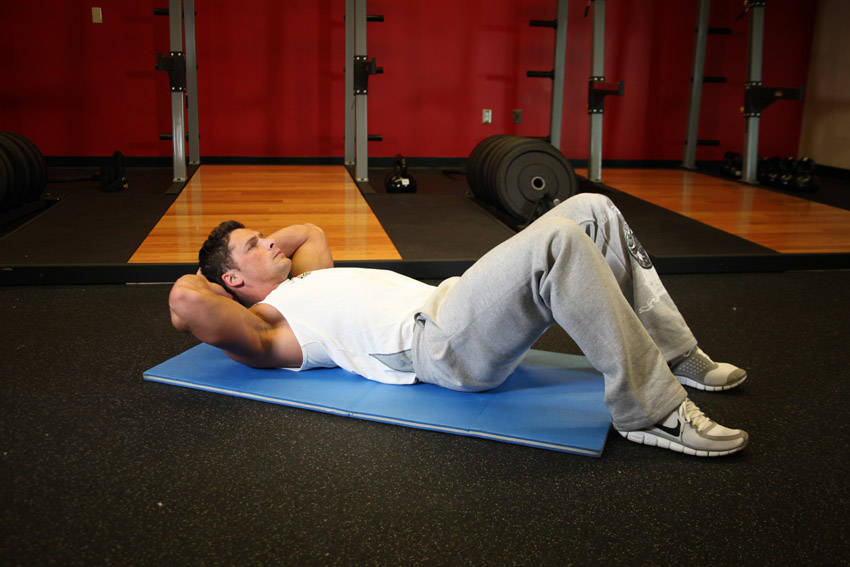
Cross-Body Crunch
A beginner compound strength exercise that works the abs, needing no equipment.
Frequently Asked Questions
What muscles do tuck crunch work?
Tuck Crunch primarily works the abs.
What equipment do I need for tuck crunch?
None. Tuck Crunch is a bodyweight movement you can do anywhere you have floor space.
Tuck Crunch: is it suitable for beginners?
Yes. Tuck Crunch is rated beginner. Movements you can learn in a session, with a low skill floor and a forgiving failure mode.
What can I do instead of tuck crunch?
Bosu Ball Cable Crunch With Side Bends, Cable Crunch, Cable Reverse Crunch train the same primary muscles and are listed with 7 more alternatives above.
Can Fitnit count my tuck crunch reps automatically?
Not automatically yet. Fitnit's AI rep counting covers push-ups, squats, dumbbell curls, crunches and pull-ups today; tuck crunch can be logged manually in the app, and tracked movements are added over time.
Photographs and step-by-step instructions from free-exercise-db, a public-domain exercise dataset. Muscle mapping and alternatives by Fitnit.
Track Your Tuck Crunch with AI
Fitnit automatically tracks push-ups, crunches, squats, pull-ups, and curls with advanced body tracking technology — and you can manually input any other workout too. Start free — Pro is $8.99/month.